About the project
Background
The high and increasing global burden of cancer highlights the need for effective implementation of primary cancer prevention programmes targeting modifiable risk factors. However, evidence-based programmes that demonstrate effectiveness in controlled settings often fail when implemented in real-world contexts, due to inadequate adaptation and implementation strategies that do not sufficiently address context-specific barriers. This can lead to reduced effectiveness, programme failure, and widening public health inequities. To bridge this gap, there is a vital need to provide decision-makers and implementers with tools to effectively adapt and implement evidence-based cancer prevention programmes.
Mission and goals
The PIECES Project is a 4-year EU-funded initiative aimed at bridging the gap between research and practice by strengthening the implementation of cancer prevention programmes in real-world settings. Through the development and testing of a digital toolkit, the project aims to supports professionals across the entire implementation process—from selecting and adapting evidence-based interventions to local contexts, to overcoming practical barriers—ultimately enhancing impact across diverse populations.
Project objectives
To build a comprehensive repository of evidence-based interventions for the primary prevention of cancer.
To establish an evidence-based generic process for adapting primary prevention programmes to local settings without compromising their effectiveness.
To develop an integrated, community-guided toolkit for selecting and adapting primary prevention programmes and developing tailored implementation strategies.
To evaluate the feasibility and effectiveness of the PCP-IT regarding implementation outcomes and processes.
To continuously optimize the PCP-IT based on the lessons learned.
To disseminate the PCP-IT, share implementation best practices, and produce policy-level recommendations.
Work Packages
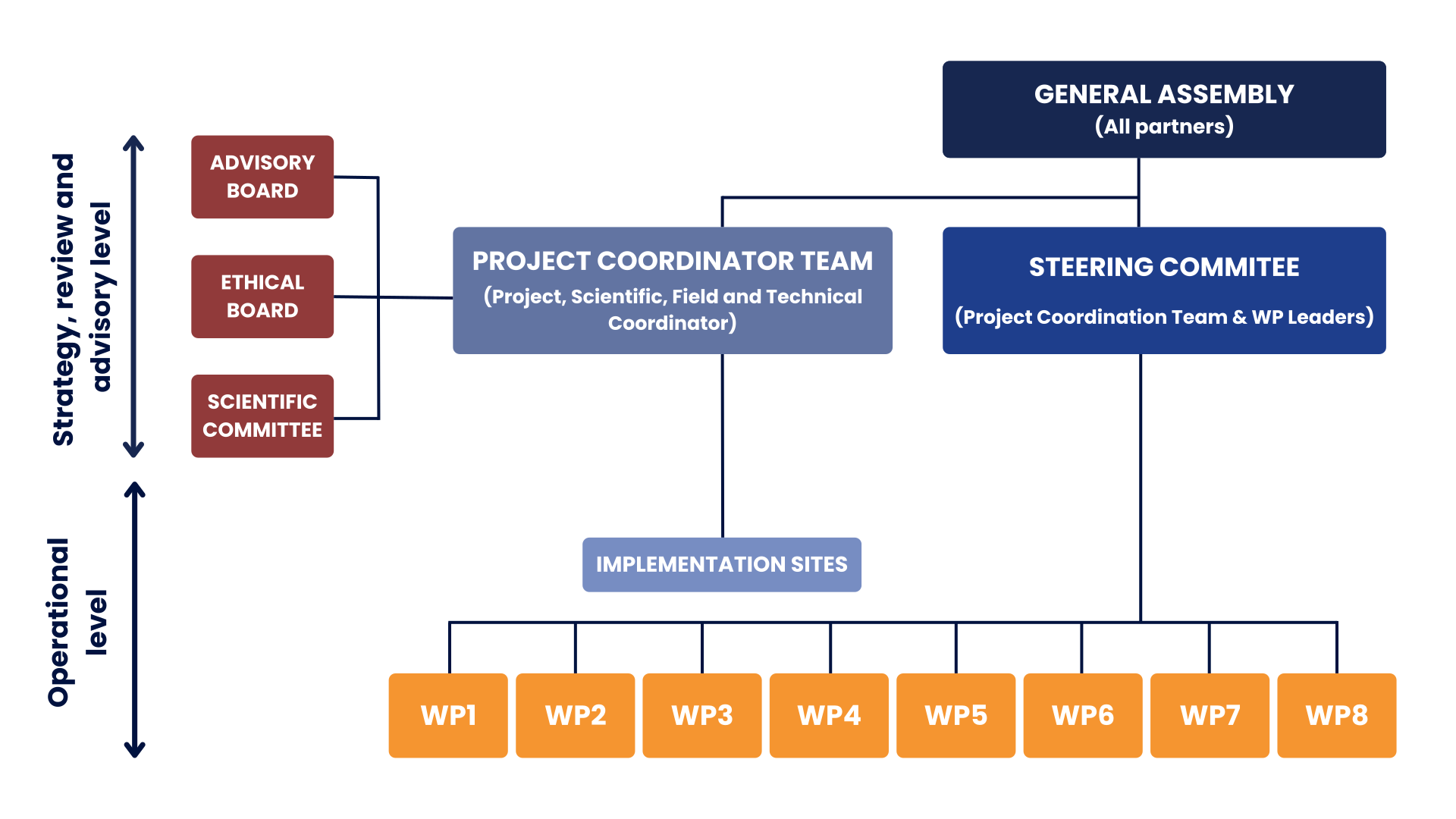
The 8 Work Packages of the project bring together various and complementary expertise from consortium partners.
WP1 focusses on establishing a comprehensive repository of literature and practice-based PCP programmes and associated implementation practices. Active working mechanisms (ie. Theory of Change) will be explicated and mapped on most relevant change techniques, including behavioural change. A complex system approach and existing appraisal system will be used assess the evidence-base.
Coordinaton: ISPRO, Italy
WP2 is dealing with adapting the selected PCP programmes to the local setting and developing tailored implementation strategies. This Work Package also deals with the continuous monitoring of current implementation practice.
WP3 corresponds to the technical efforts to support processes for adapting the prevention programmes and include the extension and adaptation of the ItFits-toolkit to develop evidence-informed tailored implementation strategies.
Coordination IDIBELL, Spain
WP4 deals with the overall evaluation PCP-IT in achieving better implementation outcomes. This WP starts early by defining the study protocol and by helping implementation sites to adapt the study protocol and get the ethical approvals. At a later stage, it collects the data and conducts and facilitates analysis, discussion, and interpretation.
Coordination Amsterdam UMC, The Netherlands
WP5 will deal with the participation of all relevant stakeholder in all project activities, ranging from the co-creation and tailoring of the interventions into the local context to the dissemination activities. Furthermore, this WP will manage the project Advisory Board, ensuring the addition of external knowledge to the project.
Coordination: University Of Stirling, United Kingdom
WP6 ensures the maximum reach of project outcomes. This WP is aimed to further enhance the dissemination and exploitation activities to leverage the project outcomes in the form of policy-level recommendations. Furthermore, this task will analyse the long-term sustainability of project outcomes beyond PIECES.
Coordination: ECL, Belgium
WP7 addresses the horizontal activities of project coordination. The Coordinator will be responsible of the overall technical quality, data, risk management and all activities concerning communication. Furthermore, the Coordinator ensures through this WP the communication and dissemination activities since the beginning of the project (from the website to reaching stakeholders) and the liaison with the Cancer Mission Cluster projects, cancer prevention-related Joint Actions and other EU funded projects. Partners will continuously report progress through project website, leaflets, newsletters, regular conference calls and annual in person meetings, that will be prompted and monitored by the Coordinator.
Coordination: Catalan Institute of Oncology (ICO), Spain
WP8 will be devoted to address the requirements emerging from the Ethics Summary Report regarding the collection of a large amount of existing data from across several countries and the appointment of an External Independent Ethics Advisor.
Coordination: Catalan Institute of Oncology (ICO), Spain