
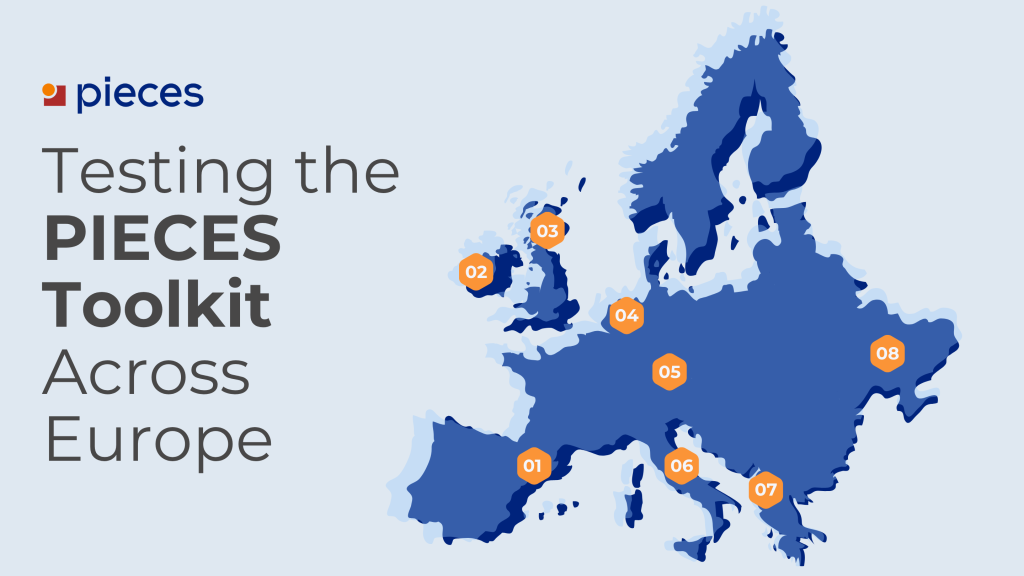
Across Europe, the implementation of the PIECES Toolkit is already generating valuable insights as multidisciplinary teams begin applying it in everyday practice. A total of 32 teams, spanning eight countries, are currently using the Toolkit in diverse real-world contexts, offering an early look at its impact on cancer prevention programme delivery.
The PIECES Toolkit is a structured, step-by-step digital solution developed to support the implementation of cancer prevention initiatives. Its deployment across a wide range of settings is enabling researchers and practitioners to evaluate its effectiveness while identifying opportunities for improvement.
Implementation efforts are taking place in a variety of environments, including public hospitals, primary care centres, schools, universities, occupational health units, private companies, social organisations, and public institutions. This diversity reflects the Toolkit’s flexibility and its potential to support programmes tailored to the specific needs of different communities.
Positive early findings
- Strong engagement from multidisciplinary teams, indicating the approach resonates with stakeholders involved in cancer prevention
- Structured, step-by-step format supporting more organised and consistent implementation progress
- Improved planning and decision-making through a clear and practical framework
- Better translation of strategy into action in real-world settings
- Generation of actionable insights, helping teams understand what works and how to refine programmes
- Enhanced collaboration and coordination across sectors, disciplines, and stakeholders
Challenges identified
- Limited time and high workloads affecting teams’ ability to fully engage
- Varying levels of digital readiness across organisations impacting adoption
- Uneven engagement within some teams, highlighting the need for additional support and motivation
- Need for improvements in usability and flexibility to better suit diverse and changing contexts
- Complex coordination across multiple stakeholders and institutions
- System-level barriers, including funding constraints, policy limitations, and capacity challenges
Continuous improvement
These early findings are playing a crucial role. Feedback from implementation teams will be used to refine its features, enhance usability, and strengthen support mechanisms, ensuring that the tool can better meet the needs of practitioners on the ground.
As implementation progresses, further insights are expected to emerge, providing a deeper understanding of how digital solutions can support effective cancer prevention across diverse settings.
More updates will follow as the PIECES Project continues to evolve.